
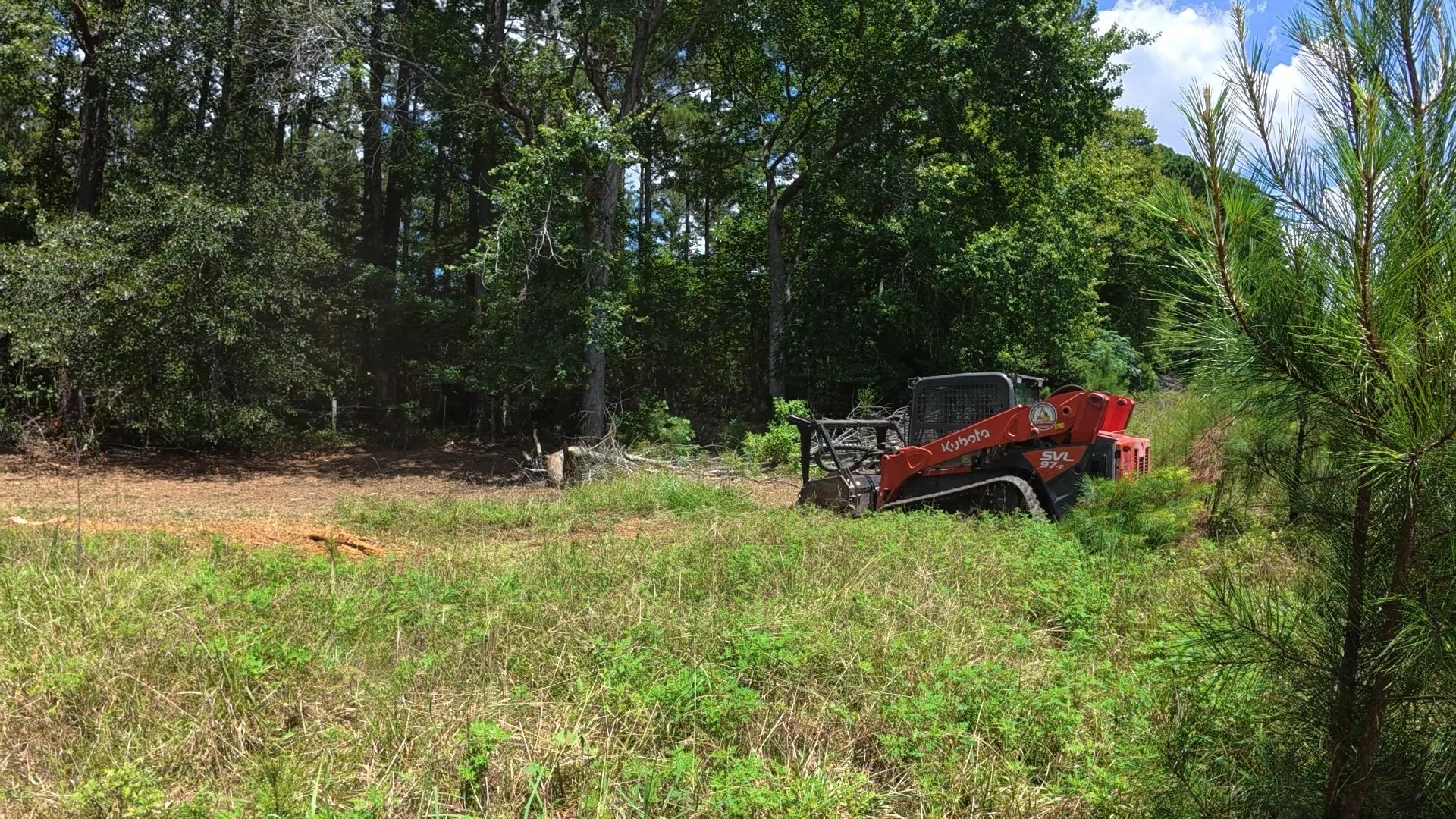
Forestry Mulching in Covington, GA & East Georgia
Forestry mulching clears overgrown, wooded, or brush-covered land in a single machine pass — cutting, grinding, and leaving mulch on site to protect the soil. It's the right call for Georgia homeowners and landowners who want land cleared without burn piles, debris hauling, or the soil damage of traditional dozer work. Under Georgia's summer open-burn ban (April 28–October 1), which covers Newton, Rockdale, Walton, and 51 other counties, mulching is also the compliant option.
ASG Dirtworx serves East Georgia from our Covington, GA base — GSWCC-certified, fully insured. Schedule an on-site estimate.
Call (770) 318-1032.
Fast, Low-Disturbance Mulching and Brush Clearing.
Mulching vs. Traditional Clearing:
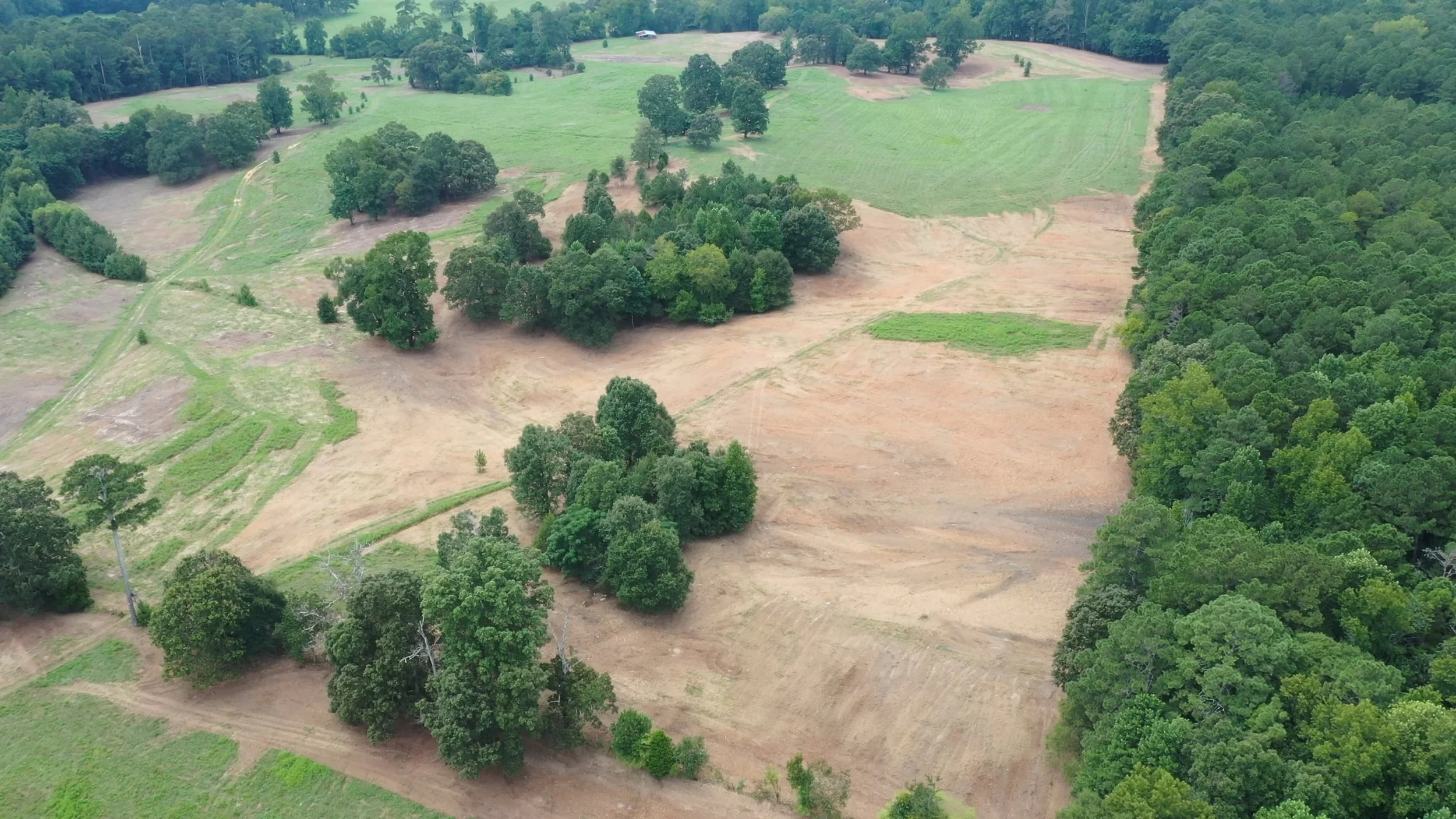
Traditional land clearing often involves heavy equipment, large crews, burn piles, or the hauling of debris. Forestry mulching is different: the machine cuts and grinds vegetation on-site, leaving behind a uniform layer of mulch. This protects your topsoil from erosion, helps retain moisture, and returns nutrients to the soil as the mulch breaks down. There’s no need for hauling or burning, which reduces cost and keeps the project cleaner. It’s also low-disturbance, meaning we’re not ripping up roots, tearing into healthy soil, or creating ruts. For homeowners, the result is a yard or acreage that’s ready to use almost immediately—without the scars of dozer tracks or leftover debris piles.
ASG Dirtworx is Georgia’s Forestry Mulching and Brush Clearing partner.
Owner-operated, fully insured, and focused on residential and small-acreage projects. We use low-disturbance forestry mulching, precision grading, drainage solutions, and gravel driveway work to make your land usable without unnecessary damage. Unlike large commercial crews, you work directly with the operator on-site, ensuring clear communication and a clean, stable finish. Every project is customized to your property’s goals, soil, and water flow for lasting results with minimal haul-off. The result: a safer, clearer, build-ready property at a fair, upfront price—done right the first time.
What We Mulch:
Forestry mulching is ideal for clearing brush, vines, invasive plants like kudzu and privet, saplings, and small trees up to about 6–8 inches in diameter. It’s also the most efficient way to open up trails, shooting lanes, or food plots for hunting properties. If you want to restore a view from your porch, clean up along fence lines, or reclaim property edges, mulching gives you a clean, usable surface without tearing up your entire yard. Because we’re focused on residential and small-acreage work, every project is scaled to your goals—whether that’s a half-acre backyard or several acres of woodland.
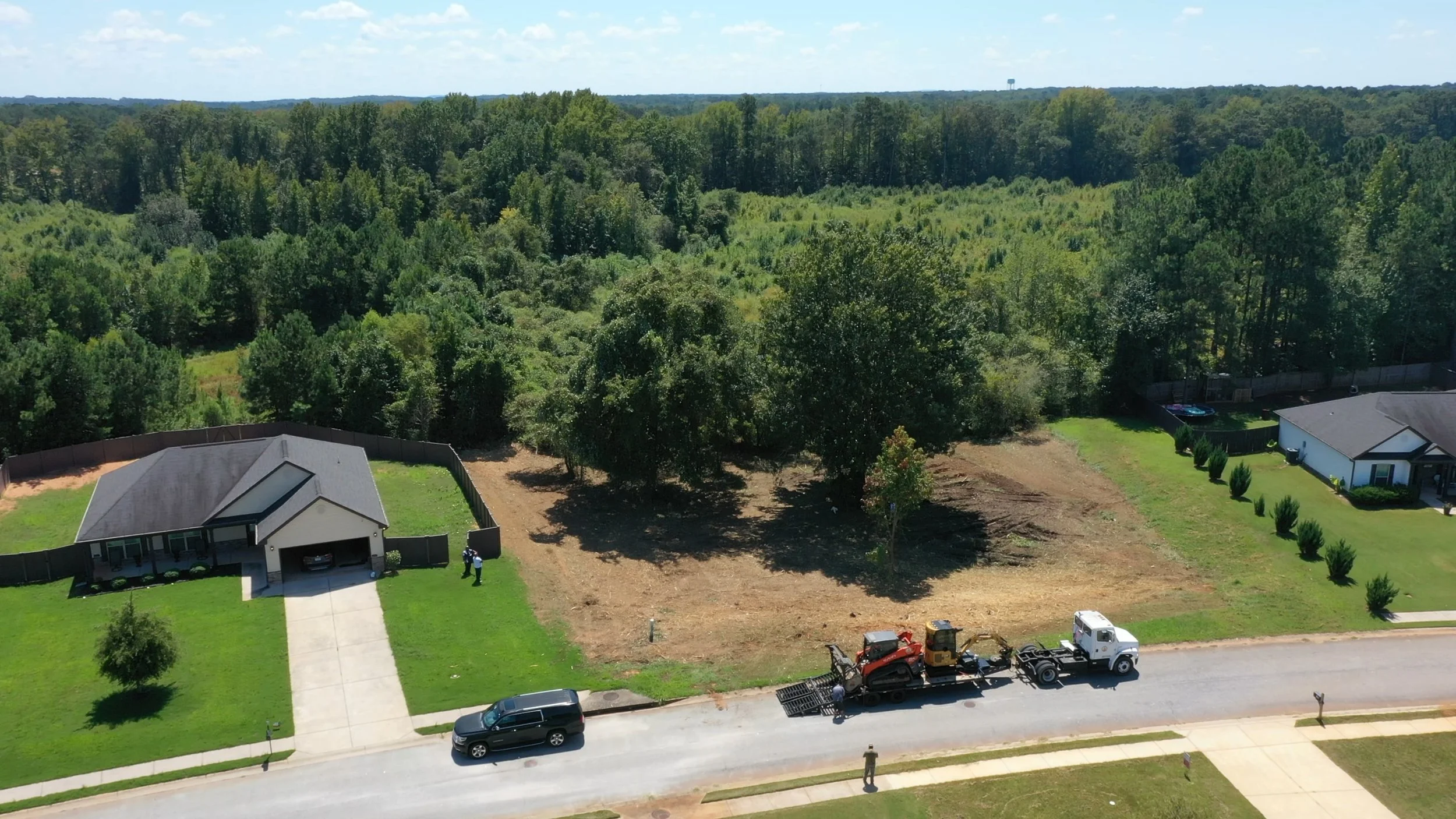
Our Process
We'd rather under-promise and over-deliver — every project should beat what you expected going in. Our clients consistently highlight our exceptional customer service and attention to detail. We run a fleet of well-kept machines in the hands of experienced operators who hold to the highest standards of quality and efficiency on every job.
Schedule Your Estimate
We start with a walk of your property. You'll get a clear, written scope and an upfront price — no surprises once the machines roll.
Confirm Project Schedule
Once approved, we will lock in your project start date. Projects usually start within 2-4 weeks
Project Completion
We make sure your project is completed on time and within budget.
Pricing & Factors
While every job is unique, here are planning ranges based on what we typically see:
Light brush: $1,500–$3,000 per acre
Mixed woods: $3,000–$6,000 per acre
Heavy growth: $6,000–$9,000+ per acre
Your actual cost depends on factors like:
Vegetation density (open brush vs. thick understory)
Average diameter of trees
Terrain (flat vs. slopes or rocky ground)
Presence of stumps, rocks, or old fencing
Access for equipment (driveway width, gate openings, ground conditions)
All pricing is confirmed with an on-site evaluation, so you know exactly what to expect before work begins.
We offer financing
Prefer to pay over time rather than all at once?
Prequalify for financing today.
.svg)
Our Mulching Process
Site Walk & Consultation: We visit your property, discuss your goals, and flag any sensitive areas.
Utility Locate: Safety comes first—when necessary, we call 811 to mark utilities before any work begins.
Planning: We identify lanes, trees to preserve, erosion risks, and the best way to move equipment.
Mulching: We mulch brush and trees directly where they stand, reducing them to a clean layer of chips.
Optional Finish Grade: For sites that need a smoother surface—like future lawns, pads, or driveways—we can grade after mulching.
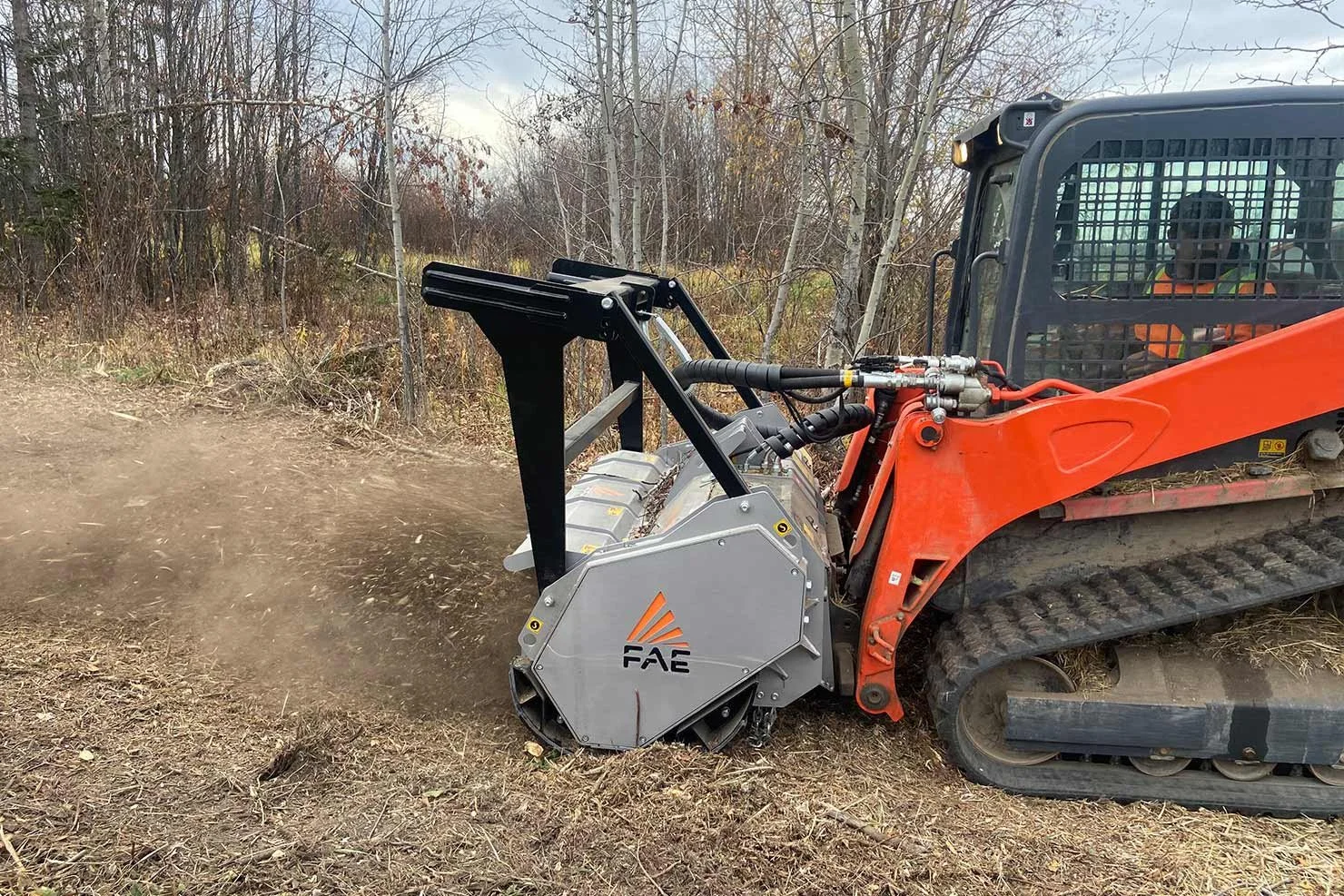
Pine beetles had turned this backyard into a stand of dead, hazardous pines. Watch our forestry mulching crew grind the dead timber and underbrush into a clean mulch layer in a single pass — no burning, no hauling, no torn-up soil. It's the same forestry mulching we run across Covington and the greater Atlanta metro every week. Got dead pines or overgrown woods of your own? Schedule an estimate with ASG Dirtworx.
FAQs
-
We’re careful around septic systems, root zones, and trees you want preserved. Because mulching doesn’t dig into the soil, it’s far less disruptive than excavation. We’ll mark protected areas during the site walk and avoid them.
-
Our equipment can efficiently mulch trees up to about 6–8 inches in diameter. Larger trees are usually left in place or handled separately by a tree removal service we can coordinate with.
-
The shredded material stays on-site as a natural mulch layer. It suppresses regrowth, helps retain soil moisture, and adds organic matter as it decomposes. Over time, it breaks down into healthy topsoil. In areas where you need bare soil—for pads or driveways—we can grade and remove the mulch layer.
-
Yes. Forestry mulching is perfect for cutting trails through wooded lots, hunting lanes, or rough driveway access. Once mulched, we can also grade and compact to create a smoother travel surface if needed.
-
For most residential mulching jobs, no permits are required. However, under Georgia's Erosion and Sedimentation Act, any land-disturbing activity over one acre requires an erosion and sediment control plan compliant with GSWCC (Georgia Soil and Water Conservation Commission) standards. We're GSWCC-certified and handle compliance on every qualifying job. If you're near streams, wetlands, or in a subdivision with an HOA, you may also need approval. We'll flag any concerns during the site walk. Call (770) 318-1032 with questions.
-
Because mulching leaves a protective layer, the risk of erosion is far lower than traditional clearing. If you’re working on a slope or near water, we can add erosion control measures like silt fencing or matting.